Protection Is an Interface Problem
A geomembrane can have an acceptable manufacturing test report and still be damaged during installation or service. Contact with sharp particles, local protrusions and uncontrolled construction loading can create concentrated stresses at the liner surface.
A geotextile protection layer is intended to help manage that contact. Selecting it requires information about the liner, the supporting and overlying materials, the loads and the construction sequence. A fabric mass alone does not describe the complete protection problem.
Locate the cushion clearly on the section drawing. A geotextile below the liner does not automatically provide the same protection against material placed above it. Each interface needs to be reviewed in its actual position.
Start with the available geotextile and geomembrane options, then ask which properties and system evidence the design requires for the proposed arrangement.
Separate Fabric Index Tests from Liner Protection Evidence
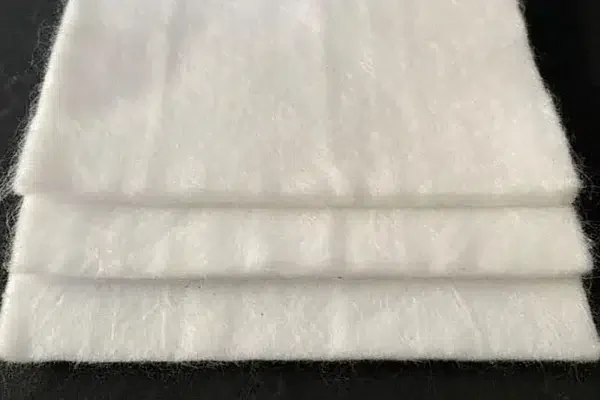
The filament-polyester sheet lists BTF400 with 400 g/m² mass, 3.9 mm nominal thickness and a CBR puncture value of 4,400 N. BTF600 is listed at 600 g/m², 4.8 mm and 6,900 N respectively. These are grade-specific data-sheet values, not proof of a particular liner’s performance under aggregate and sustained loading. [1]
ASTM D6241 is a static puncture index method for the fabric. It is useful within an agreed material specification, but its result is not a direct prediction of whether a geomembrane system will puncture in the field. [3]
The smooth-geomembrane sheet separately lists 22 kN/m tensile yield strength and 480 N puncture resistance for the 1.5 mm column. The liner and fabric results involve different materials and test arrangements. Adding their printed puncture numbers does not produce a combined system capacity. [2]
| Submittal item | Evidence to request | Decision it supports |
|---|---|---|
| Cushion grade | Mass, thickness and relevant mechanical tests | Product identity and acceptance |
| Liner grade | Thickness and material-specific properties | Liner conformity |
| Contact materials | Particle geometry, grading and condition | Interface severity |
| System assessment | Relevant loading and protection evaluation | Suitability of the assembled section |
GRI-GM13 concerns HDPE geomembrane manufacturing properties; it should not be presented as a certificate that every protection-layer arrangement is suitable. Project-specific assessment and acceptance remain separate. [4]
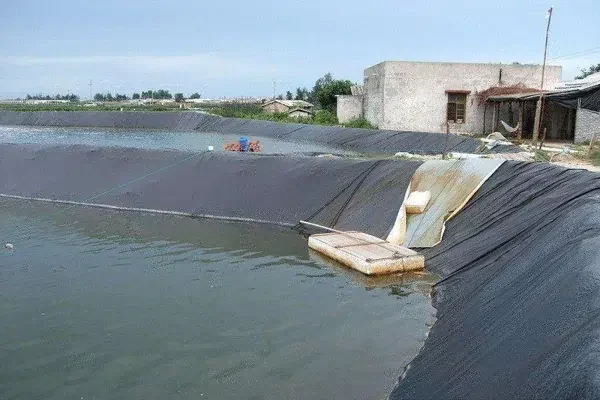
Inspect the Surface and the First Cover Placement
Before placing the cushion, inspect the receiving surface for debris, sharp particles, abrupt changes and unsupported areas. The fabric should follow the prepared geometry without spanning voids or being stretched tightly across depressions.
Check cushion continuity around penetrations, corners and anchor details. Arrange joints according to the approved drawing, keeping the liner contact smooth and avoiding unnecessary folds. A repair patch needs enough extent and an accepted fixing arrangement; a loose offcut placed over a defect is not a documented repair method.
Deploy the liner using the accepted handling sequence. Dragging sheets across dirty or sharp surfaces can defeat the purpose of a clean cushion. Keep the protection layer free of contamination during the interval before the liner is covered.
The initial placement of overlying material deserves a hold point where the project requires it. Observe the drop, spreading and equipment method, and check that the liner and cushion remain in their intended positions. Do not interpret a thicker fabric as approval for uncontrolled tipping or direct trafficking.
Record the cushion grade, roll identification, installed zones, damage and repairs before concealment. Coordinate these records with the liner panel and seam documentation so a later inspection can identify which materials occupy each area.
If an installed area cannot be inspected adequately, resolve the access and sequencing problem before covering it. A complete paperwork pack does not compensate for an unobserved critical interface.
Review a Change in Contact Material
Consider an installation where the approved contact aggregate is replaced by another source. Review the new grading, particle shape and placement method before assuming the existing cushion decision remains valid. The fabric grade may be unchanged, but the contact conditions that the system must accommodate may have changed.
Record which technical assessment supports the revised arrangement and which party accepts it. Do not treat a clean material certificate as evidence that the new aggregate–cushion–liner combination has been assessed.
The same reasoning applies when construction equipment or placement height changes. A protection-layer proposal should remain connected to the accepted work method, not simply to the material purchase. If the first placed area shows unexpected movement or damage, investigate the interface and sequence before repeating it. A documented response at that stage is more useful than increasing the fabric mass later without understanding the cause.
Consider Sustained Loading and Repair Access
Protection performance can depend on more than the initial construction event. The selected system needs to suit its loading duration, temperature, contact materials and environmental exposure. Request the evidence needed by the design rather than extrapolating a catalogue index test.
Replacing a buried liner or cushion can require removing drainage materials, reinstating joints and repeating inspections. Those costs belong in the commercial assessment alongside the initial fabric price.
A heavier grade may be appropriate, but the decision should be supported by the relevant interface requirements. Conversely, an alternative should not be rejected solely because its nominal mass differs if the required evidence demonstrates suitability and the designer accepts it.
Compare bids on the same complete section and documentation package. Check whether the supplier’s proposal includes the required product identification, test reports, delivery traceability and installation information, rather than only a roll price.
Where drainage materials contact the liner, coordinate the protection review with the drainage geocomposite or aggregate details. Changing one layer can change the conditions at another interface.
Turn the Protection Review into a Clear Purchase Requirement
The order should identify the accepted cushion grade and the conditions under which it was assessed. Retain the distinction between a product specification and a system suitability decision.
The review checklist should cover:
- Liner material, thickness and surface type.
- Cushion polymer, construction and grade.
- Adjacent particle grading and angularity.
- Relevant construction and sustained loads.
- Required fabric index tests and system evidence.
- Joint, penetration and repair details.
- Material traceability and pre-cover inspection records.
- Written approval of substitutions affecting the interface.
Ask for unresolved information before dispatch. Discovering that a proposed fabric was assessed against another aggregate or loading condition after installation is an avoidable technical and commercial dispute.
Send the section, contact-material information and acceptance requirements through our project inquiry page with the quantity request.
References
Tech Note: Do not add fabric and geomembrane puncture-test values together; protection must be assessed for the actual layered interface and loading conditions.