
Geocomposite Drain Products for Civil & Environmental Projects

GeoBuild Materials manufactures and supplies drainage geocomposite products for engineered drainage layers. The documented composite-geonet construction combines a geonet core with continuous-filament nonwoven material. Review the complete product, surrounding materials, loading and discharge arrangement when selecting a geocomposite drain for quotation.

What Is a Drainage Geocomposite?

A drainage geocomposite combines a drainage core with other functional layers, such as a geotextile filter. The core provides a path for flow along the layer, while the filter interface is selected with the adjacent soil or material.

The composite is one part of a drainage system. Its orientation, contact surfaces, loading, joints and outlets must be considered together. A core description or nominal thickness alone does not establish the performance of the installed geocomposite drainage layer.

Our Documented Drainage Geocomposite

geobuild-pdf-download-icon.webp

Composite Geonet with Nonwoven Layer

The available technical source identifies a geonet core and continuous-filament nonwoven component. It lists composite flow-related information alongside core properties. Request the grade and complete supplied layer arrangement required by the project.
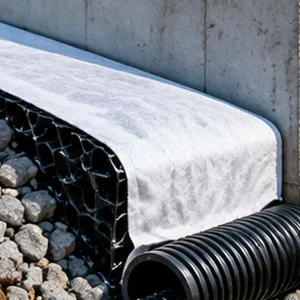
Review the Complete Drainage Product

Review itemComplete geocompositeGeonet coreFilter-layer interface
Product identityOffered grade and supplied layer arrangementCore constructionSpecified nonwoven component
Flow requirementRequired performance under the stated conditionsCore flow path and orientationContact with adjacent materials
Mechanical requirementBehavior within the installed layer systemThickness and documented tensile propertiesRequired filter and interface properties
Project acceptanceComplete-product documents and test basisSupporting component informationCompatibility with the adjacent soil or material
Selection Note: Compare flow information using consistent conditions and terminology. Core data should not be substituted for complete-geocomposite performance without an appropriate technical review.

What Drainage Geocomposites Do

Provide an In-Plane Flow Path

The drainage core is used to convey liquid along the layer. The required direction, loading and boundary conditions belong in the product specification.

Coordinate Filtration

The filter layer must be selected with the adjacent soil or material. Identify the filtration requirements rather than assuming every nonwoven layer is suitable.

Connect Collection to Discharge

A drainage layer needs a workable route to the specified outlet. Include connections and discharge details in the system review.

Fit Within Layered Construction

The geocomposite may contact soil, barriers or structural surfaces. Those interfaces affect the information required for selection and acceptance.

Support Drainage-System Planning

Product format, orientation and installation details should be coordinated with the layout. A drainage mat does not replace the design of the complete collection system.

Where Drainage Geocomposites Are Considered

Geocomposite drainage systems are considered in retaining-wall, buried-structure, environmental-containment and civil drainage details. Each use has its own flow, loading, filtration and interface requirements.

Send the drainage section, expected conditions and outlet arrangement with the enquiry. GeoBuild Materials can then discuss the offered construction and technical information around the same brief used by the project team.

geobuild-drainage-geocomposite-retaining-wall-drainage

Retaining-Wall Drainage

Identify the wall interface, adjacent backfill and collection outlet. Review filtration and the required flow information with the installed loading and orientation.

geobuild-drainage-geocomposite-buried-structure-drainage

Buried-Structure Drainage

Provide the structural surface, surrounding materials and drainage connection detail. Product selection should address both the drainage path and the interface requirements.

geobuild-drainage-geocomposite-environmental-containment

Environmental Containment Systems

Drainage layers within containment systems must be reviewed with the barrier and adjacent materials. Include the expected liquid exposure and complete-product acceptance criteria.

geobuild-drainage-geocomposite-roads-civil-drainage

Roads & Civil Drainage

Share the layer section, loading context and intended discharge route. The required flow direction and surrounding materials should be clear before comparing geocomposite grades.

geobuild-drainage-geocomposite-slope-drainage

Slope Drainage Details

Provide the slope layout, contacting materials and outlet arrangement. Include any required interface or stability information as part of the engineered drainage detail.

How to Select a Geocomposite Drain

1. Drainage Function

Define the collection area, flow direction and intended discharge arrangement.

2. Installed Conditions

State loading, hydraulic conditions, adjacent materials and relevant operating exposure.

3. Complete-Product Flow Data

Request the required information with its test basis and conditions.

4. Core and Filter Construction

Confirm the offered core, nonwoven component and supplied face arrangement.

5. Interfaces and Connections

Include joints, overlaps, outlets and project-specific interface requirements.

6. Supply and Submittals

Provide area, roll-format constraints, destination and required documents.

Drainage Geocomposite Technical Data

The available Composite Geonet technical sheet separates geocomposite information from core and geotextile information. Review the offered grade and distinguish complete-product properties from component properties when preparing a comparison.

Confirm the required flow terminology, test conditions and supplied layer arrangement before approval. Request additional project-specific information wherever the available sheet does not answer the specification.

Drainage Geocomposite Manufacturing & Quality Review

GeoBuild Materials is a geosynthetics manufacturer and supplier. A drainage-geocomposite quality review should identify the offered grade, core construction, nonwoven component and complete supplied product.

Include the required dimensional, mechanical, filtration and flow-related documentation in the RFQ. Review available records against the project conditions, with component and complete-product information clearly distinguished.

Drainage-Layer Selection & Project Support

GeoBuild Materials supports product selection, specification review, technical documentation and supply coordination. Share the drainage section, loading, interfaces and outlet detail at the start.

The product discussion can then address the offered construction and any information still needed before acceptance, alongside quantity and delivery requirements.

Construction Review

Identify the core, nonwoven component and supplied layer arrangement.

Performance-Requirement Review

Clarify required flow information and the conditions used for comparison.

Documentation Support

Distinguish complete-geocomposite evidence from component data.

Supply Coordination

Discuss area, roll format, handling and delivery requirements.
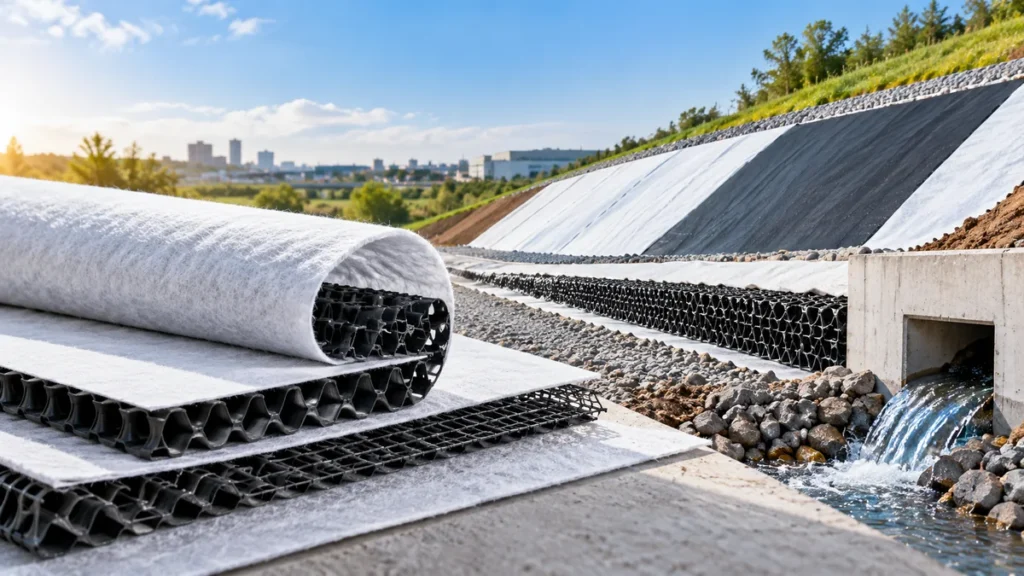
Why Source Drainage Geocomposites from GeoBuild Materials?

A Defined Product Construction

Start with the documented core-and-nonwoven composite.

Complete-Layer Comparisons

Review the assembled product alongside its component information.

Condition-Based Technical Enquiries

Specify loading and interfaces when requesting flow-related data.

Focused System Coordination

Include filtration, connections and outlets in the project brief.

Practical Supply Planning

Connect the drainage layout with quantity and delivery needs.

Explore Products, Contact GeoBuild.

Drainage Geocomposite FAQs

How does a drainage geocomposite differ from a bare geonet?

A geocomposite combines the core with additional functional layers. The documented product includes a nonwoven component, so its complete construction should be reviewed separately from core-only information.

No. The required complete-product flow information, installed conditions, filter compatibility and mechanical criteria also need review.

The specification needs a consistent basis for comparing the offered product with the design. Identify loading, direction and boundary conditions rather than comparing isolated figures from different test arrangements.

Provide the adjacent material and the project filtration criteria. A generic nonwoven description does not establish that the filter is appropriate for every soil.

No. The drainage layer requires a coordinated collection and discharge arrangement, including the connections specified by the project.

Request the Composite Geonet sheet for the offered geocomposite and grade. Drainage Cell and Drainage Sheeting are separately documented products and should not be substituted.

Include the section, loading and hydraulic conditions, flow direction, adjacent materials, filter criteria, outlet detail, area, destination and required submittals.