
Geogrid Products for Civil & Infrastructure Projects
GeoBuild Materials manufactures and supplies geogrid products for roads, reinforced-soil structures, slopes and pavement projects. Our documented range includes biaxial, uniaxial, warp-knitted polyester, fiberglass and steel-plastic welded geogrids. Select the construction and grade around the required reinforcement direction, surrounding materials and project specification.
What Is Geogrid?
Geogrid is an open-grid geosynthetic used to provide tensile reinforcement or support aggregate stabilization within an engineered construction system. Its ribs, junctions and apertures interact with the surrounding material; the required behavior depends on the grid construction and its position in the design.
Different geogrids serve different purposes. A grid selected for an aggregate base is not automatically interchangeable with one specified for a reinforced-soil wall or an asphalt layer. Start with the engineering function and the governing drawings.
Our Geogrid Products

Biaxial Geogrid
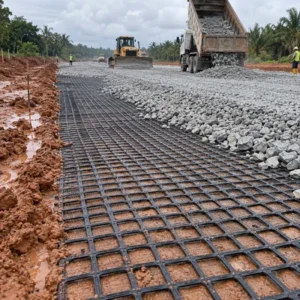
An open-grid construction with properties considered in two principal directions. Common enquiry contexts include aggregate-base reinforcement and working platforms. Review directional properties, aperture compatibility and the specified layer arrangement.
Uniaxial Geogrid
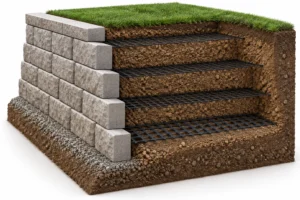
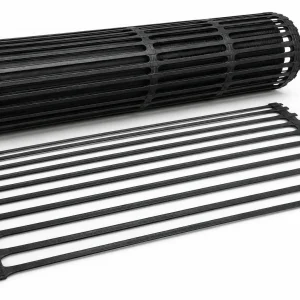
A grid selected where reinforcement is required mainly in a principal direction, including reinforced-soil walls and slopes. Confirm the reinforcement orientation, design requirements and any facing or connection detail.
Product illustration
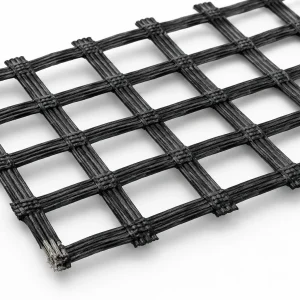
Warp-Knitted Polyester Geogrid
A textile-based open-grid construction for project-specified reinforcement. Buyers should identify the required tensile behavior, product construction and applicable design documentation rather than choosing solely by roll appearance.
Product illustration
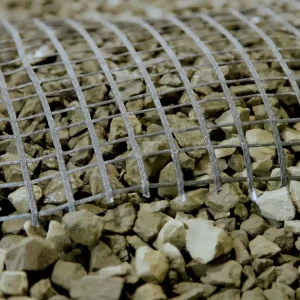
Fiberglass Geogrid
A distinct grid construction considered in pavement-reinforcement enquiries. Confirm its intended position in the pavement, the substrate condition and the project requirements before treating it as equivalent to an earthwork grid.
Product illustration

Steel-Plastic Weld Geogrid
A separately documented geogrid construction for project-specific reinforcement requirements. Compare the offered product identification and directional properties with the design; do not infer interchangeability from a similar strength label.
Product illustration
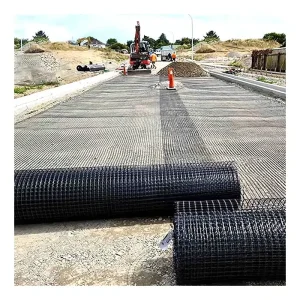
Which Geogrid Type Fits the Project?
| Type | Main distinction | Typical project discussion | Selection focus |
|---|---|---|---|
| Biaxial geogrid | Grid properties in two principal directions | Aggregate bases and working platforms | Directional properties, aggregate interaction and layer position |
| Uniaxial geogrid | Principal reinforcement direction | Reinforced-soil walls and slopes | Orientation, design requirements and connections |
| Warp-knitted polyester geogrid | Textile-based reinforcement construction | Project-specified earthwork reinforcement | Product construction and required tensile behavior |
| Fiberglass geogrid | A separate pavement-related construction | Pavement-reinforcement details | Layer location, substrate and installation requirements |
| Steel-plastic weld geogrid | A distinct reinforced grid construction | Specification-led reinforcement enquiries | Offered grade, directional properties and design compatibility |
What Geogrids Do
Soil Reinforcement
Geogrids can provide tensile reinforcement within engineered soil structures. Reinforcement direction and layout must follow the design, with the surrounding fill and interfaces considered together.
Aggregate Stabilization
Open apertures allow interaction with aggregate in appropriate base-layer arrangements. The selected grid must suit the aggregate, supporting ground and specified construction detail.
Load-Distribution Support
Within a designed road or working platform, a grid can contribute to the performance of the reinforced layer. Its effect depends on the complete ground and pavement system.
Wall and Slope Reinforcement
Reinforced-soil applications require a coordinated reinforcement layout, suitable fill and drainage. Facing and connection requirements should be included in the product enquiry where relevant.
Pavement Reinforcement
Pavement grids have a different layer context from ground-reinforcement grids. Product selection must account for the existing surface, planned pavement construction and specified placement procedure.
Where Geogrids Are Used
Geogrids are considered in road bases, working platforms, reinforced-soil walls, slopes, embankments and pavement layers. Each application places different demands on product construction, reinforcement direction and the interaction with adjacent materials.
GeoBuild Materials supports product enquiries around the project detail. Send the layer cross-section, soil or aggregate information, loading context and specification so the offered grid can be compared on the same basis as the design.
Roads & Aggregate Bases
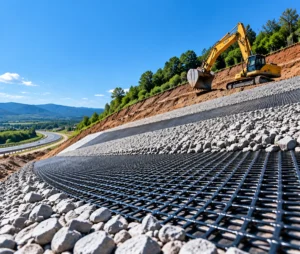
Geogrids may be installed within designed aggregate layers for reinforcement or stabilization. Review subgrade condition, aggregate grading, layer position and traffic requirements together before selecting the product.
Reinforced-Soil Retaining Walls
Wall enquiries should identify reinforcement direction, facing connections, fill and drainage requirements. Product properties must be reviewed against the wall design rather than a generic grid description.
Slopes & Embankments
For reinforced slopes and embankments, provide the geometry, fill information, reinforcement layout and project criteria. The grid is one component of the engineered earthwork system.
Working Platforms & Access Routes
Temporary and permanent platforms require attention to loading, ground condition and construction sequence. Include the intended use and layer build-up when requesting a geogrid product review.
Pavement Reinforcement
Where pavement reinforcement is specified, confirm the grid construction, substrate preparation, interface treatment and layer position. Ground-reinforcement grids should not be substituted without an approved technical review.
How to Select the Right Geogrid
1. Required Function
Define whether the grid is required for soil reinforcement, aggregate stabilization or a pavement detail.
2. Reinforcement Direction
Identify the principal directions and orientation specified by the design, including wall or slope layouts.
3. Tensile and Deformation Requirements
Compare the relevant documented properties and test basis. Where long-term design information is required, request it explicitly.
4. Apertures and Interfaces
Review grid geometry with the aggregate or fill and any facing, connection or adjacent geosynthetic layers.
5. Construction Conditions
Check placement, handling and protection requirements against the proposed fill and construction sequence.
6. Project and Supply Brief
Provide drawings, required grade or properties, quantity, preferred roll format, destination and required submittal documents.
Geogrid Technical Data Sheets
Review the available product-specific data sheets before confirming the geogrid for quotation. Different grid constructions have different property tables. Use the document for the selected type and grade, then compare it with the project requirements.

Biaxial Geogrid
View technical data sheet

Warp-Knitting Polyester Geogrid
View technical data sheet

Fiberglass Geogrid
View technical data sheet

Steel Plastic Weld Geogrid
View technical data sheet

Data-sheet values apply to the identified product and grade. Confirm the required design information, test documentation and supply format before approving an offer.
Geogrid Manufacturing & Quality Review
GeoBuild Materials is a geosynthetics manufacturer and supplier. For geogrid procurement, the quality discussion should identify the offered construction and grade, the stated directional properties and the documents required for acceptance.
Include the project inspection and submittal requirements in the RFQ. Buyers can then review available product information against the specified criteria before confirming an order. Product-family wording does not establish a certificate or project approval.
Engineering & Project Support
GeoBuild Materials supports geogrid sourcing through product selection, specification review, technical documentation and project coordination. Share the design brief early so the product discussion reflects the intended construction system.
Useful inputs include cross-sections, reinforcement direction, soil or aggregate information, required properties, quantity, delivery destination and submittal requirements.

Type Selection
Compare documented grid constructions with the required engineering function.

Specification Review
Review directional properties and required documentation against the project brief.

Technical Documents
Identify the correct product data sheet and any additional information required.

Supply Coordination
Discuss quantity, roll format, packing, destination and delivery requirements.

Why Source Geogrids from GeoBuild Materials?
A Documented Product Range
Distinct geogrid constructions support a focused comparison of product options.
Specification-Based Enquiries
Product discussions begin with the required function and project documents.
Type-Specific Data
Available technical sheets help buyers compare the actual offered product.
Connected Product Support
Selection and documentation questions can be considered with the supply brief.
International Supply Planning
Destination, quantity and document needs are included in quotation preparation.
Geogrid FAQ
How do biaxial and uniaxial geogrids differ?
Biaxial geogrids are considered in two principal directions, while uniaxial products are selected around a principal reinforcement direction. The correct choice depends on the intended function and design. A road base and a reinforced-soil wall should not be treated as the same selection problem.
Can I use the same geogrid for roads and retaining walls?
Do not assume interchangeability. Roads may require interaction with an aggregate layer; walls require a reinforcement layout and may have facing or connection requirements. Submit the relevant drawing and specified properties so the proposed construction can be reviewed for its actual role.
Is fiberglass geogrid equivalent to an aggregate-base grid?
No equivalence should be assumed from appearance or a nominal strength alone. Fiberglass geogrid enquiries commonly concern pavement reinforcement, with different interfaces and placement requirements. Confirm the grid type and the layer in which it is specified.
Which properties should a geogrid RFQ include?
State the required grid construction, tensile and deformation requirements, reinforcement direction and relevant test basis. Add aperture or connection requirements when specified. For designs requiring long-term reinforcement information, identify the required documentation instead of relying only on a short-term strength table.
What information is needed for geogrid installation planning?
Provide the prepared formation, grid orientation, adjacent materials and planned fill placement. Overlap, anchoring, connections and construction protection must follow the approved detail and product procedure. This product-family page does not prescribe a universal installation dimension or sequence.
Are geogrid technical data sheets available?
Existing sheets cover biaxial, uniaxial, warp-knitted polyester, fiberglass and steel-plastic welded products. Select the corresponding sheet and confirm its grade. If the design needs additional properties or reports, list those requirements in the enquiry so availability can be checked.
How can I request a comparable geogrid quotation?
Send the application, drawing or specification, required construction and properties, reinforcement direction, quantity, roll-format requirement and destination. Include packing and submittal needs. This helps compare quotations for the same technical and commercial scope rather than different products with a similar name.